GST Collections Rise 13.9% to ₹1.95 Lakh Crore in June 2026: What It Means for Businesses
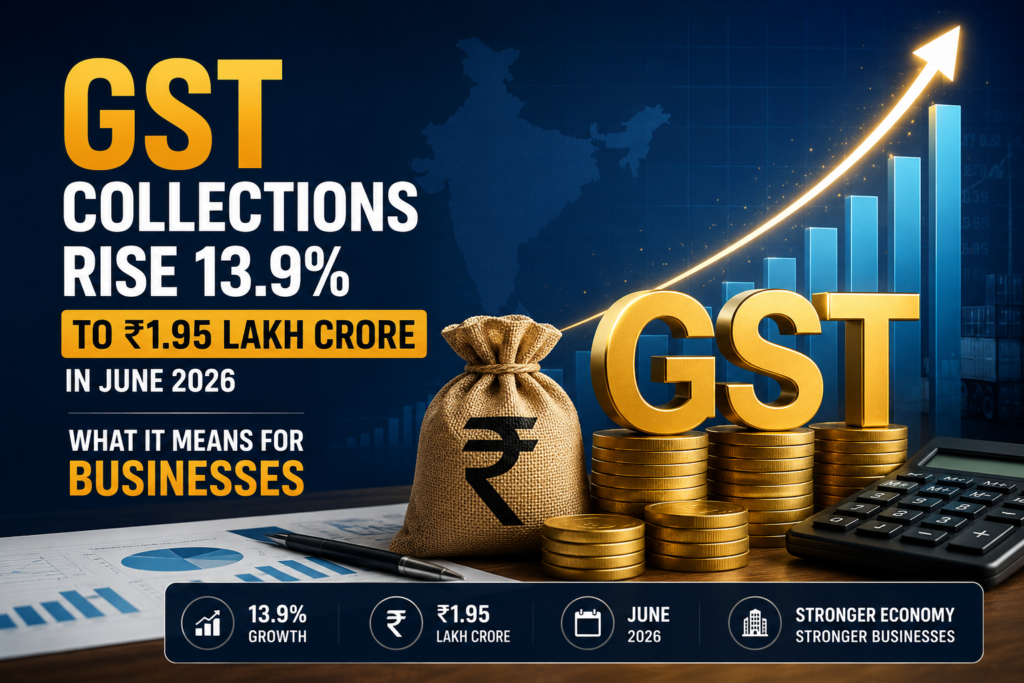
India’s Goods and Services Tax (GST) collections reached ₹1.95 lakh crore in June 2026, recording a 13.9% year-on-year growth and highlighting the continued strength of India’s tax system. The increase has been driven by stronger domestic consumption, improved tax compliance, and higher import-related GST collections. This consistent rise reflects the government’s efforts to modernize indirect taxation while encouraging businesses to become more compliant. For businesses of all sizes, these figures indicate a healthier economy and a tax administration that is increasingly technology-driven and transparent.
What Is Driving This Growth?
Several factors have contributed to the strong growth in GST collections during June 2026. The widespread implementation of e-invoicing, stricter return matching, digital verification systems, and better compliance among taxpayers have significantly reduced tax leakage. Higher import activity has also contributed to increased GST revenue. Additionally, the growing formalisation of businesses and improved awareness among taxpayers have expanded the GST base, enabling the government to collect higher revenues without increasing tax rates.
What Does It Mean for Businesses?
Higher GST collections are generally considered a positive indicator for the economy. They reflect increased business activity, better compliance, and stronger consumer demand. However, they also signal that tax authorities now have access to more sophisticated digital tools for identifying mismatches and non-compliance. Businesses should therefore focus on timely GST return filing, accurate invoicing, proper reconciliation of Input Tax Credit (ITC), and maintaining complete documentation. Companies that adopt robust compliance practices are less likely to receive notices and are better positioned for sustainable growth.
The Road Ahead
As India enters another year of GST reforms, businesses can expect continued improvements in digital tax administration and greater emphasis on transparency. Authorities are increasingly using data analytics and automation to monitor compliance, making it essential for businesses to remain proactive rather than reactive. The strong GST collection figures for June 2026 demonstrate that India’s tax ecosystem is becoming more efficient and resilient. Businesses that stay compliant, embrace digital processes, and seek professional tax guidance when required will be better prepared for future regulatory developments while contributing to the country’s growing economy.